White Christmas Odds Favor Colorado, Wyoming, Montana, North Dakota, Minnesota, Wisconsin, Michigan, New York, and Maine as Most U.S. States Stay Snow-Free
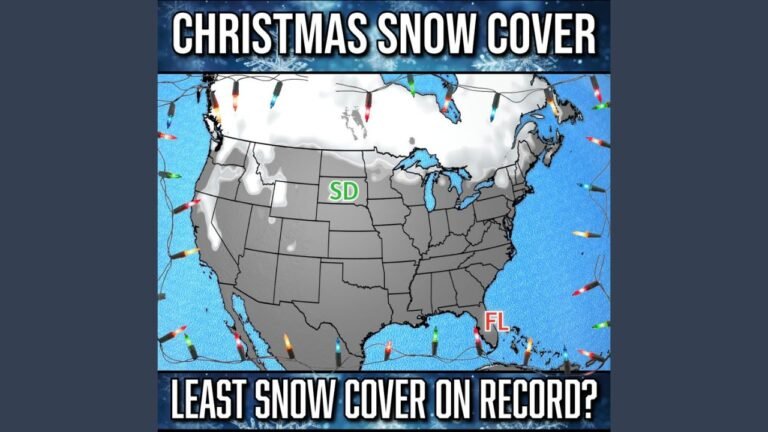
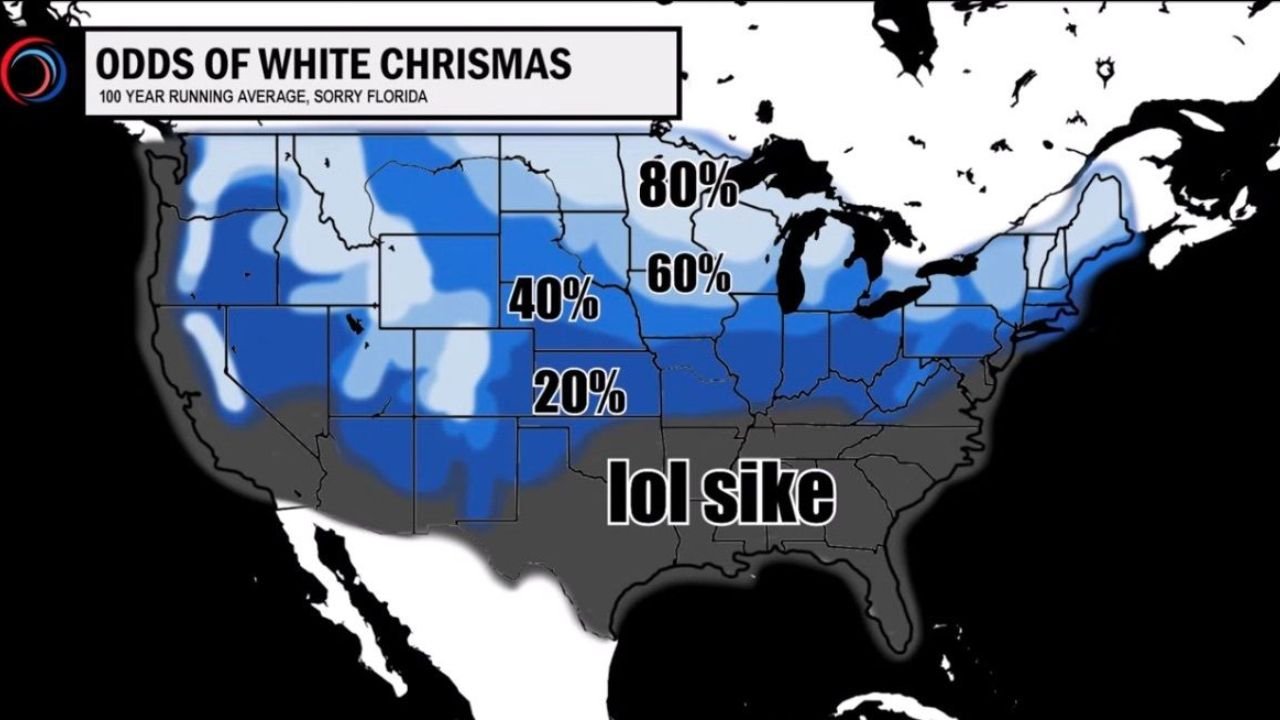
UNITED STATES — Historical Christmas snow cover data shows that most of the United States is unlikely to see a White Christmas, with meaningful snow chances limited to a specific group of northern and high-elevation states. According to a 100-year running average of snow cover on December 25, the states with the strongest odds of snow on the ground include Colorado, Wyoming, Montana, North Dakota, Minnesota, Wisconsin, Michigan, New York, and Maine.
Large portions of the South, Southwest, and lower Midwest fall into near-zero probability zones, reinforcing that snow on Christmas morning remains a regional exception rather than a national norm.
Southern and Southwestern States: Near-Zero White Christmas Odds
The data clearly shows almost no historical chance of a White Christmas across states such as:
- Florida
- Texas
- Louisiana
- Mississippi
- Alabama
- Georgia
- Arizona
- Southern California
- New Mexico
These areas are consistently snow-free on Christmas Day, even during colder-than-average winters. Any snowfall in these regions during late December is historically rare and typically melts quickly.
Rockies: Colorado, Wyoming, and Montana Lead the Nation
The Rocky Mountain region stands out as one of the most reliable zones for Christmas snow.
States with the highest probabilities include:
- Colorado
- Wyoming
- Montana
Higher elevations across these states fall into the 40% to 80% probability range, with mountainous terrain allowing snowpack to persist through December regardless of short-term warming.
Northern Plains: North Dakota and Northern Minnesota See Strong Odds
The Northern Plains also show elevated chances:
- North Dakota — among the highest probabilities nationally, approaching 80% in northern areas
- South Dakota — lower odds overall, especially in central and southern portions
- Minnesota — strong chances statewide, highest in the north
This region benefits from colder average temperatures and a higher likelihood of early-season snowstorms.
Upper Midwest: Wisconsin and Michigan in Favorable Zones
The Upper Midwest, particularly:
- Wisconsin
- Michigan
falls into the 40% to 60% range, with lake-effect snow helping maintain snow cover closer to the Great Lakes. Southern portions of these states show lower odds, while northern areas remain more reliable.
Northeast: New York and Maine Lead, Coastal Areas Lag
In the Northeast, snow odds vary sharply by location:
- Maine and northern New York show moderate to high probabilities
- Interior New England performs better than coastal zones
- Coastal Mid-Atlantic states remain largely snow-free
Elevation and distance from the coast are key factors in determining whether snow survives through Christmas.
What This Data Really Means
This map reflects long-term climatology, not a year-specific forecast. It shows where snow is statistically common on Christmas Day, not where it is guaranteed.
Historically:
- Most Americans do not experience a White Christmas
- Snow on December 25 is confined to northern and mountainous states
- Even high-probability areas still experience snow-free holidays in some years
Bottom Line
Based on historical data, Colorado, Wyoming, Montana, North Dakota, Minnesota, Wisconsin, Michigan, New York, and Maine hold the best odds for a White Christmas, while most southern and central states should expect a green or brown holiday instead.
Short-term weather patterns can still shift outcomes in any given year, but climatology strongly favors snow remaining a regional tradition rather than a nationwide one.