
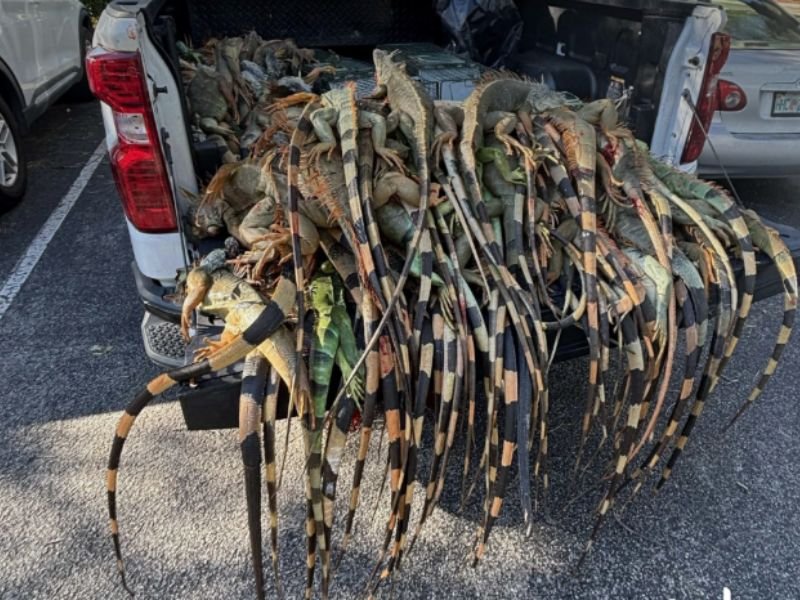
FLORIDA — A record-breaking cold snap across South Florida sent temperatures into the low 30s in some locations, leaving thousands of cold-stunned iguanas immobilized — and in many cases falling from trees — as residents and professional trappers rushed to collect them.
Officials said the sheer scale of the iguana fallout became clear as more than 5,000 “frozen” iguanas were turned in at designated drop-off locations, while removal teams hauled away thousands more in just days.
Record Cold Temperatures Triggered a Massive Iguana Fallout
The surge in iguana pickups followed an intense cold spell that pushed overnight and early-morning temperatures far below what these reptiles can tolerate. Because iguanas are cold-blooded, they rely on external warmth to function, and when temperatures plunge, their bodies slow down dramatically.
In this case, the cold was severe enough that large numbers of iguanas became stunned and unable to move normally across wide areas of South Florida.
Over 5,000 Iguanas Were Turned In at Drop-Off Sites
Officials with the Florida Fish and Wildlife Conservation Commission (FWC) said over 5,000 iguanas were left at drop-off locations during the cold spell. The agency issued a special permission that allowed people to move live iguanas during the outbreak, which helped streamline removals while conditions were still dangerous for the animals.
Trappers Say They Collected Iguanas by the Hundreds
Longtime professional trapper Blake Wilkins said he was among the many workers collecting iguanas in huge numbers. He described the volume as surprising, noting that he and his team captured nearly 3,000 iguanas in just two days, reflecting how widespread the cold-stunned reptiles were across neighborhoods and canals.
Why Iguanas “Freeze” When Temperatures Drop Below 40
Iguanas cannot regulate their body heat, which makes them extremely sensitive to temperature swings. Officials noted that when temperatures fall below 40 degrees, many iguanas become stunned, and some die. When stunned, they can appear lifeless, but may recover once temperatures rise — which is why officials typically urge the public not to assume an iguana is dead just because it isn’t moving.
What Residents in South Florida Noticed During the Cold Blast
The event wasn’t just a wildlife story — it became a neighborhood moment across the region. As temperatures dipped, residents reported seeing iguanas piled up in yards, sidewalks, and near roadways, especially in areas with trees and water access where iguanas commonly live.
With trappers and residents gathering them quickly, the drop-off totals climbed fast, showing how widespread the impact was over a short period of time.
What This Means Going Forward as More Cold Snaps Hit
While South Florida is known for warmth, short-lived cold snaps can still happen — and each one has the potential to trigger another wave of cold-stunned reptiles. The recent numbers highlight how established iguanas have become in the region and how quickly cold weather can change the landscape.
As temperatures rebound, officials typically remind residents that iguanas that look “frozen” may become active again, and people should use caution when approaching them.
If you live in a region that experiences sudden cold snaps, have you ever seen wildlife behave differently during extreme temperature drops? Share what you noticed and follow more unusual weather impacts at WingsPNW.com.
Leave a Reply